The Legend
As it goes, the Three legends lie at the heart of Durga Puja. Maa Durga’s victory over Mahishasura, Lord Rama’s autumnal worship of the Goddess, and the Bengali belief that Durga returns to her parental home every year. All combined what we get is auspicious festival of the “Navaratri” and “Durga Puja”.
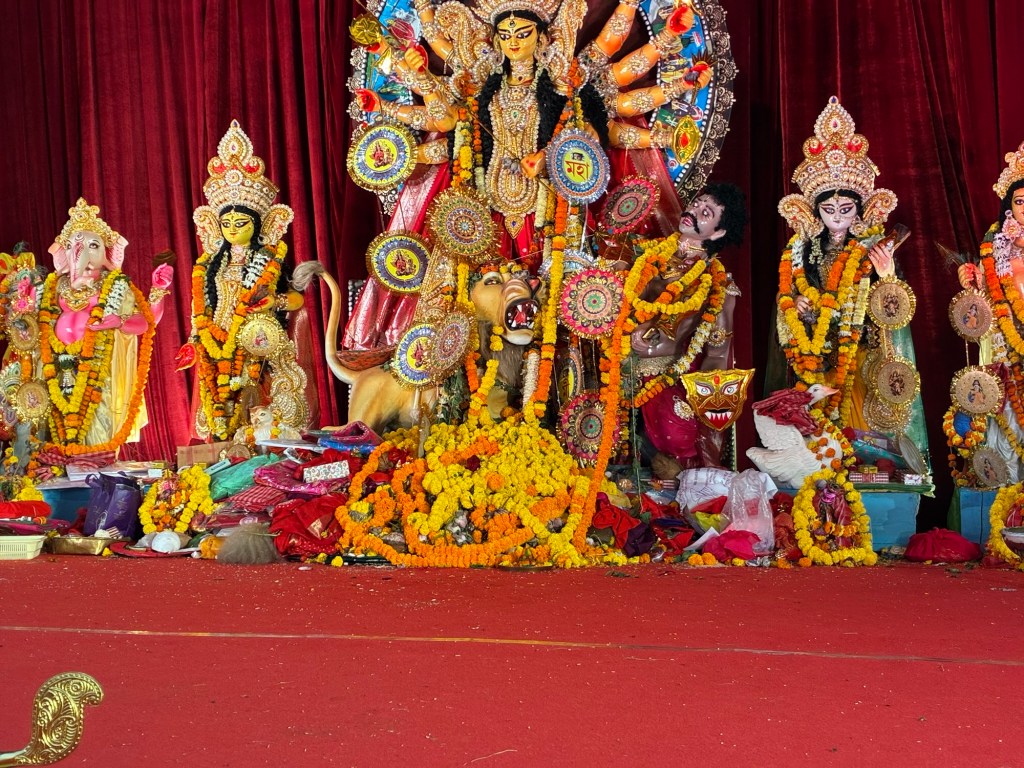
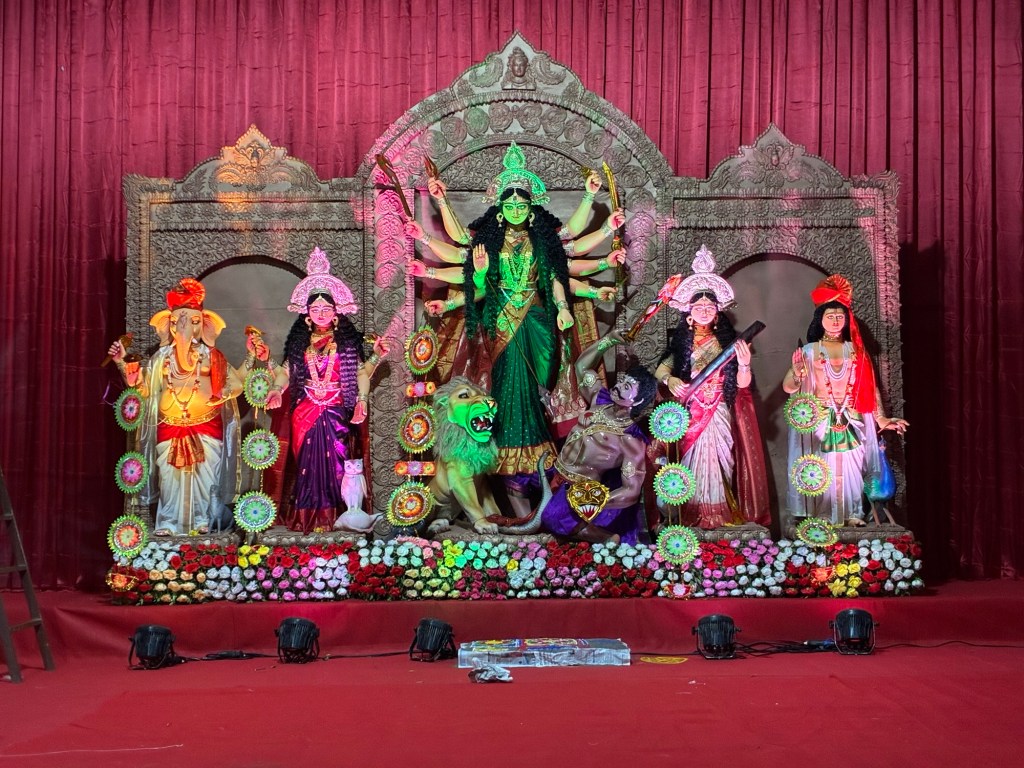
The battle between Maa Durga and Mahishasura
Lets begin with the end of Mahishasura. The story of Mahishasura. Mahishasura was born to Rambha, a powerful Asura king, and a female buffalo. This unusual origin explains his name: Mahisha means buffalo, while asura refers to a class of powerful beings who frequently oppose the Devas in Hindu mythology. Mahishasura wanted to become so powerful that nobody could defeat him. He therefore undertook severe tapasya — intense spiritual austerities — to please Lord Brahma, the creator in the Hindu trinity.
When Brahma appeared before him, Mahishasura asked for immortality. But Brahma could not grant him absolute immortality, so Mahishasura sought a different kind of protection. According to the widely told version, he requested a boon that he could be killed only by a woman. He believed no woman could ever possess the power to defeat him.
The legend is not simply about a demon fighting the gods. It describes a struggle for control of heaven and the cosmic order. Unable to defeat Mahishasura, the gods approached Brahma, Vishnu and Shiva for help.
In the Devi Mahamya, Durga manifests from the combined divine energies of the gods after Mahishasura defeats them.
When Mahishasura heard of Durga, he sent his forces against her. She defeated his commanders and armies. At the decisive confrontation with Mahishasura himself, he repeatedly changed his form, including taking the shape of a buffalo. Durga eventually subdued him and killed him with her divine weapons. The gods were liberated, and the cosmic order was restored.
The irony is central to the legend: Mahishasura had asked for protection from the very kind of opponent he considered insignificant. The woman he underestimated became the force he could not defeat.
Why is Durga Puja celebrated in Autumn
A second important legend connects Durga Puja with the Ramayana.
Before his final battle with Ravana to rescue Sita, Lord Rama is said, in the Bengali tradition associated with Krittivasi Ramayana, to have worshipped Goddess Durga to seek her blessings. This worship took place during autumn, outside the season traditionally associated with the Goddess’s principal worship.
The episode is known as Akal Bodhan — the untimely or out-of-season awakening of the Goddess. This story connects the autumn festival with the awakening of Durga and her blessings before the struggle against evil. It is an important part of Bengali religious tradition.
The Bengali story: Durga’s annual visit to her parental home
Among bengalis, the festival carries different, more intimate meaning. Maa Durga is also Uma, the daughter of Himavan and Menaka, married to lord Shiva (Maheshwara) who returns to her parental home every autumn with her children. For Bengalis, her arrival is alike homecoming — a time of joy, family get togethers and endless celebration. Her departure on Dashami brings about a wave of sadness.
How did we celebrate Durga Puja in Pune
Pune’s durga puja celebrations are unlike, that of West Bengal. The puja associations or the bengali associations hosting the puja are discreet. It can not be confused with the more widely celebrated Navaratri and Dussehra with the pomp and colour of Garba.
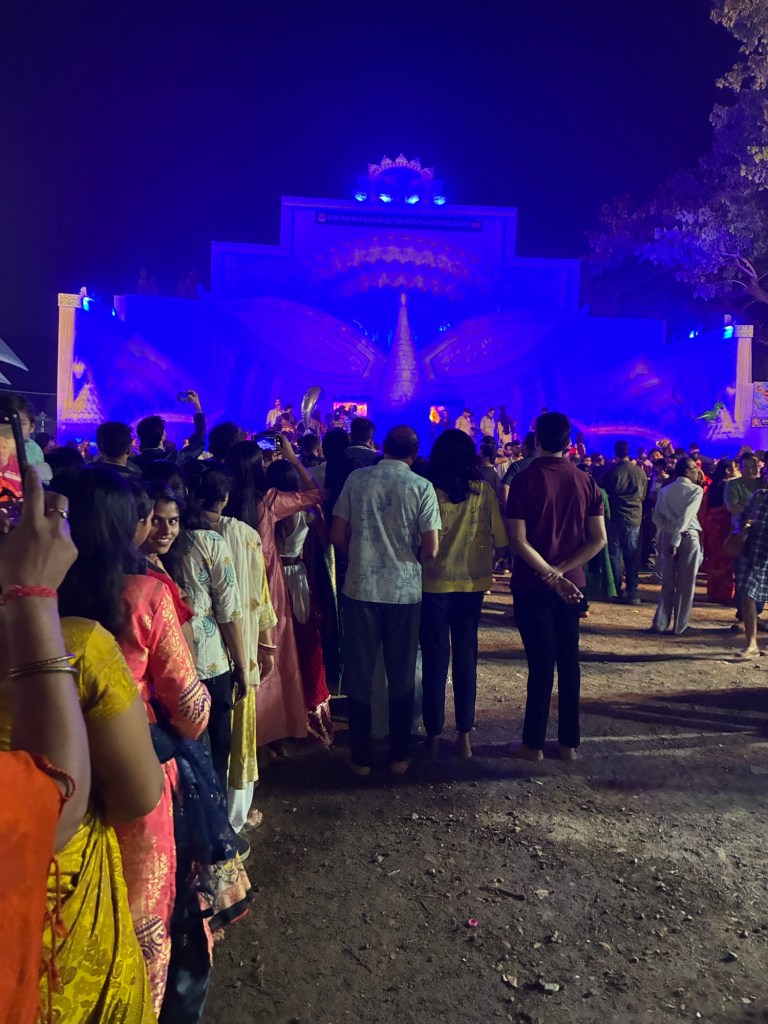
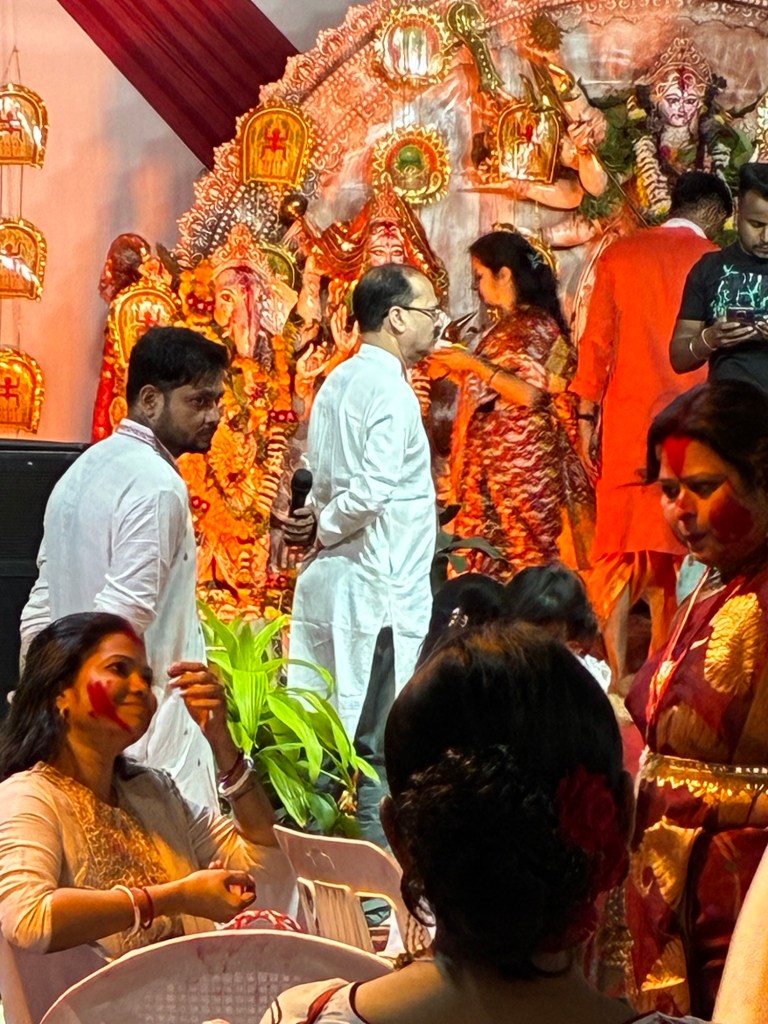
Bengalis across the city get together in different small pockets and pray to Maa Durga in community halls and large grounds. The Pandals (Puja arena) are usually big and big enough to house 500 people at anytime. Often you will find yourself surrounded with food stalls.
The very bengali menu – Mughali Parantha, Devilled egg, Fish fingers, Fish fry, Mutton cutlets and veg cutlets. Not to forget Bengalis favourite Biriyani, Luchi (Puri for rest of the country, bengalis have luchi) and a dash of chinese noodles here and there.
It is a time to forget the annual fitness goals, and remember that the route to the heart goes via the stomach. Eat and make merry. That is exactly what you will find another hundreds to bengalis are up to.
The oldest Durga puja is in its 87th anniversary. At the Pune Kali Bari. A good 45 mins drive from my place. Large crowd, visitor car parking and darshan was well managed.
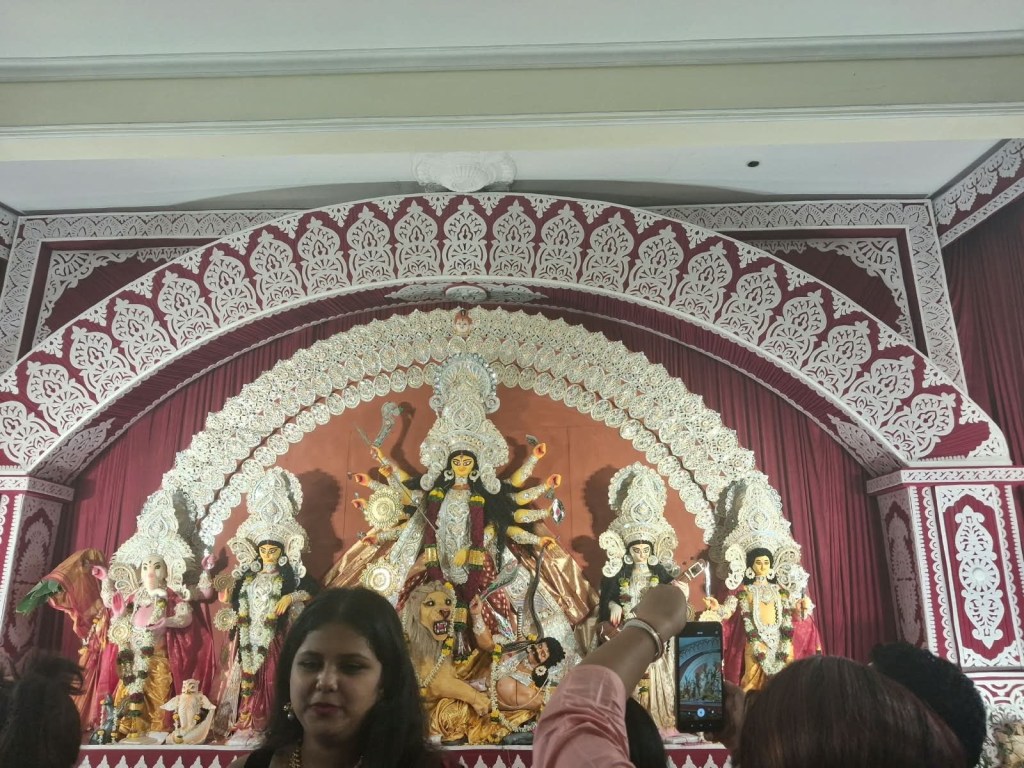
We visited another one of my personal favourites, Rohi Villa palace at Koregaon Park. This traditionally had been where the elite Bengalis of Pune would gather and celebrate Durga Puja. The true “Ek chala” pratima (A single framed idol housing Maa Durga and her four children). The traditional ek-chala pratima brings Maa Durga and her divine family together beneath a single, sweeping backdrop — a beautiful expression of Bengal’s artistic heritage.
This time Durga Puja was celebrated for 6 days. Saptami held for 2 days. it has not been observed in the last 100 years. Though a few times we had 4 days puja in the last 25-30 years. Making the 6 days ritual rare and auspicious. What brings more joy is to know that 2027 promises another 6 days ritual, with 2 days celebrating Ashthami. Bengalis world wide are already soo happy.
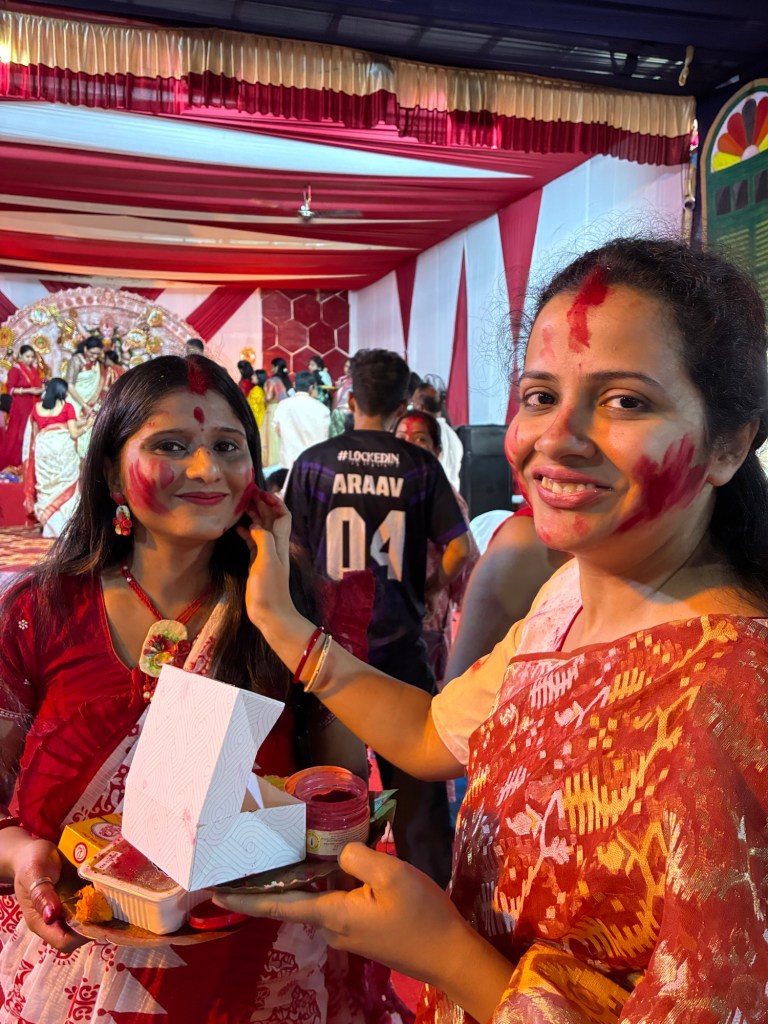
The traditional Sindur Khela – It is the joyous celebration of sisterhood with prayers for a long and happily married life and sorrow of the departing Maa dugga. After applying vermillion to the forehead and cheek of Maa Durga, married women apply vermillion to each other, exchange sweet and greet everyone “Subho Bijjoya“.
Heyy, If you liked reading this blog, do not forget to like it and share with your family and friends. Also, please consider going through a few more my best blogs given below. Happy Reading. Thanks for your time.


Hey, If you liked what you read, do like this blog and leave a comment.